Dhaka Airport loses lakhs, engine damage from diversions
Airlines face massive financial losses and aircraft engine damage as dense fog forces over 50 flight diversions from Dhaka
 Desk Report
| Published: Tuesday, January 13, 2026
Desk Report
| Published: Tuesday, January 13, 2026
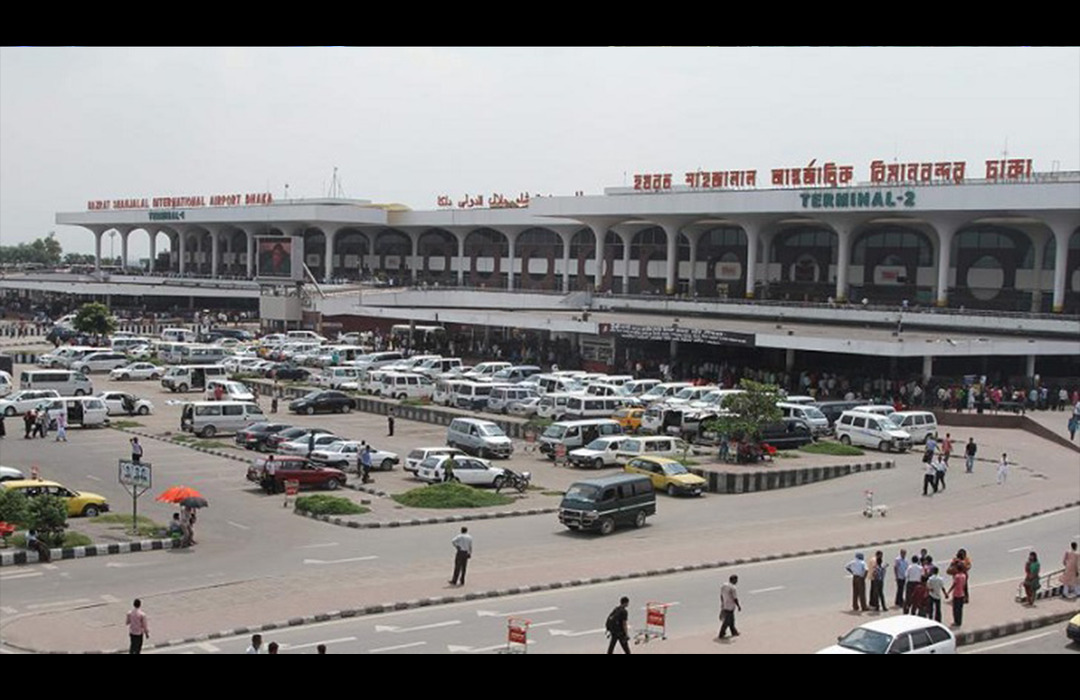
File photo
Airlines operating at Hazrat Shahjalal International Airport (Dhaka Airport) are suffering financial losses worth lakhs of taka per diversion as dense winter fog forces aircraft to land at foreign airports, while repeated takeoffs and landings cause severe engine damage.
Over 50 international flights have been diverted in recent days due to thick fog blanketing Dhaka's main airport. Each diversion triggers additional fuel consumption, landing and parking fees at foreign airports, and hotel accommodation costs for stranded passengers, creating cascading financial impacts across airline networks.
Kamrul Islam, general manager of public relations at US-Bangla Airlines, told media that operational costs increase sharply with each diversion.
"When flights supposed to land in Dhaka are diverted to Sylhet or Chattogram, our operational costs increase sharply. Passengers lose valuable time, and each diversion damages an aircraft's engine cycle," he said.
Kamrul Islam expressed serious concern over the airport's Instrument Landing System. Dhaka previously achieved Category II capability but has now reverted to Category I standards. Aircraft currently require runway visibility of around 1,200 to 1,500 metres to land, whereas the original goal was upgrading to Category III, which would allow landings even in zero visibility conditions. "This situation is simply unacceptable," he stated.
Engine damage represents a critical long-term cost for airlines. Aircraft engines are designed for specific numbers of takeoff and landing cycles. When flights divert to alternate airports and then make additional short hops back to Dhaka, engines undergo extra stress beyond planned operations, accelerating wear and reducing their operational lifespan.
Airlines report severe financial losses from multiple factors. Beyond immediate fuel and airport fee expenses, carriers face engine maintenance costs, scheduling disruptions affecting entire fleet operations, and compensation expenses for passenger inconvenience. Each diversion creates a ripple effect across the airline's network, delaying subsequent flights and straining operational resources.
Mofizur Rahman, managing director of NOVOAIR, revealed some Dhaka-bound flights have been diverted as far as Bangkok, where aircraft remain delayed for 30 to 40 hours.
"Airlines incur huge hotel costs, and passengers suffer immensely. In Kolkata, passengers are sometimes kept seated inside the aircraft and not even allowed to disembark," he said.
On January 4, runway operations were severely disrupted for nearly four hours from early morning. Despite circling in the air, at least eight flights could not land and were forced to divert to alternate airports. Passengers completing 10 to 12-hour journeys from abroad circled overhead only to land in Kolkata, Sylhet, Chattogram, Bangkok and even Vietnam instead of Dhaka.
Abdullah Faruque, DFO and ATR 72-600 captain at Fly Dhaka Airlines, explained that when visibility drops below Category I limits, landing attempts must be abandoned immediately.
"At that moment, we have to decide within seconds where to divert. Flights have gone to Kolkata, Sylhet, Chattogram, Bangkok, and even Vietnam," he said.
Financial burden extends beyond airlines to passengers who face additional expenses and lost time. After hours of air travel, passengers endure extended waiting periods at unfamiliar airports, often without clear information about when they can reach their final destination. Some remain confined to aircraft for extended periods, unable to disembark or access basic facilities.
Experts note unplanned urban development around the airport makes upgrading Hazrat Shahjalal to Category III extremely difficult. Ministry of Civil Aviation and Tourism Adviser Sheikh Bashir Uddin recently stated that achieving Category III would require demolishing numerous high-rise buildings in Uttara, which is not practical given current circumstances.
Current technological capabilities lag behind regional standards, forcing airlines to rely on neighbouring airports during peak fog periods. Winter fog returns annually to disrupt Bangladesh's main international airport, yet questions persist about whether adequate measures exist to handle seasonal weather challenges that occur predictably each year.
Government is moving ahead with plans to extend Cox's Bazar Airport's runway from 10,700 feet to 14,000 feet and upgrade it to Category III standards. Once completed, it could serve as a domestic safe haven for fog-diverted flights during winter months. Until then, airlines and passengers have little choice but to depend on neighbouring airports like Kolkata and wait for clearer skies over Dhaka.
Airlines calculate losses not just in immediate operational expenses but in long-term fleet maintenance costs. Engine overhauls become necessary sooner than planned when aircraft undergo unexpected additional cycles. Scheduling disruptions force airlines to deploy backup aircraft, increasing overall operational expenses and reducing fleet efficiency across their entire network.

Make Comment
Login to CommentPopular News



Subscribe to News Letter
Latest News