ICAO Climate Week Opens with Net-Zero Focus
 Desk Report
| Published: Wednesday, June 03, 2026
Desk Report
| Published: Wednesday, June 03, 2026
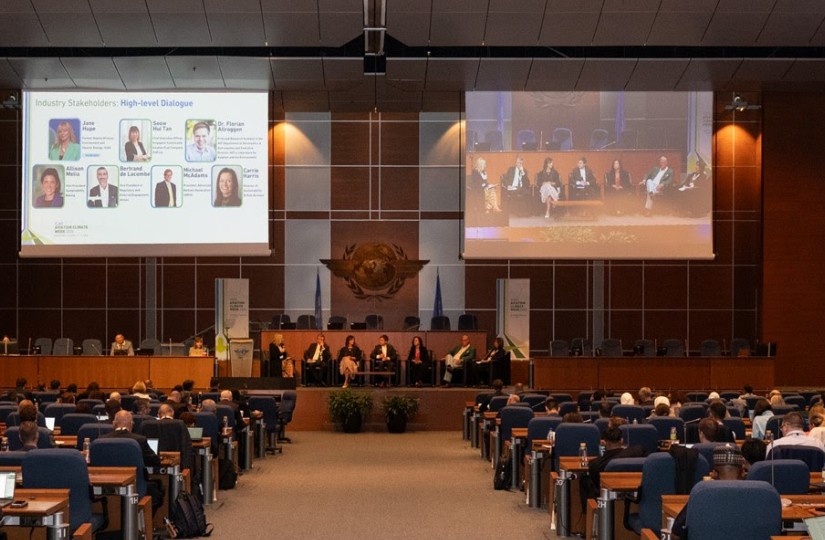
Photo: ICAO
The International Civil Aviation Organization (ICAO) opened its Aviation Climate Week on Tuesday with industry leaders, regulators, and experts calling for accelerated action to reduce aviation emissions and strengthen resilience against the growing impacts of climate change.
The first day of discussions focused on the aviation sector's commitment to achieving net-zero carbon emissions by 2050, with participants highlighting the need for greater international cooperation, technological innovation, and investment in sustainable solutions.
Speakers pointed to increasing production of Sustainable Aviation Fuels (SAF), supported by ICAO's globally harmonized framework, as a key development in the industry's decarbonization efforts. They also highlighted advances in data-sharing platforms, scenario analysis, and collaborative research initiatives as evidence of growing coordination across the sector.
Participants stressed that non-carbon dioxide emissions, including contrails, remain a significant challenge and could account for up to half of aviation's overall warming impact. Recent operational trials showed that rerouting flights to avoid areas prone to persistent contrail formation could substantially reduce climate effects, making it a practical near-term mitigation measure.
Discussions also pointed out the necessity of operational improvements such as modernized air traffic management systems, real-time flight trajectory planning, and enhanced ground-handling procedures. Industry representatives noted that emerging technologies, including hydrogen-powered aircraft, could play a major role in reducing emissions, although widespread deployment would be required to meet long-term climate goals.
Several panelists emphasized that regulatory and certification frameworks must evolve alongside technological advances. ICAO was widely recognized for its role in coordinating international standards and bringing stakeholders together, and there were calls for stronger global frameworks to prevent regulatory fragmentation.
Alongside emissions reduction, climate adaptation emerged as a central theme of the day's discussions. Participants warned that extreme weather events are already affecting airport operations and business continuity more severely and sooner than many earlier projections had anticipated.
Survey findings presented during the session indicated that while most aviation stakeholders recognize the growing risks posed by climate change, only a limited number have moved beyond risk assessments to implement concrete adaptation measures.
Access to financing, particularly in developing countries, was identified as a major obstacle. Airports in many regions face increasing climate-related risks while operating with constrained resources and rising costs. Participants also cited limited coordination between national and local planning authorities and insufficient stakeholder engagement as factors hindering effective adaptation efforts.
A shortage of location-specific climate data and forecasting tools was highlighted as another challenge, leaving some airports unable to conduct comprehensive risk assessments. However, delegates noted growing interest in tailored adaptation strategies and stronger collaboration with meteorological agencies and research institutions to improve preparedness.
The discussions concluded with calls to integrate climate resilience into broader infrastructure development and investment strategies. Participants said that embedding adaptation measures into long-term business planning would help airports maintain operational continuity, enhance safety, and protect economic value in the face of increasing climate risks.
ICAO Aviation Climate Week continues through the week, with further sessions expected to address sustainable aviation fuels, emerging technologies, climate finance, and international policy measures aimed at supporting the sector's transition toward a more sustainable future.
Source: ICAO PR

Make Comment
Login to CommentPopular News





Subscribe to News Letter
Latest News