
500 jets? Boeing’s biggest comeback deal comes into view as CEO joins Trump on China trip
প্রকাশ: মঙ্গলবার । মে ১২, ২০২৬
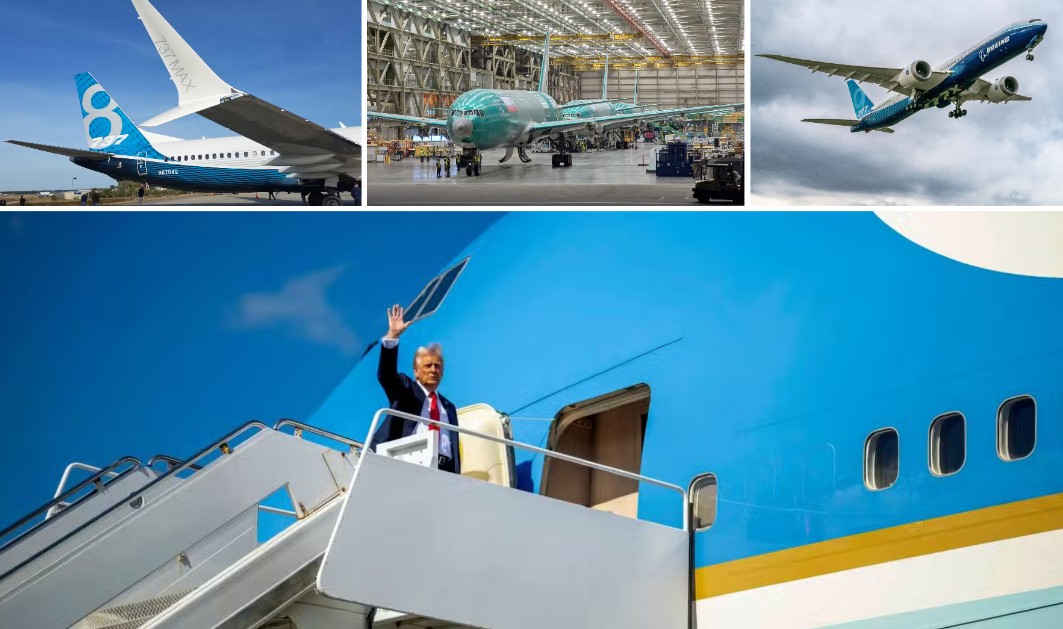
President Trump's upcoming visit to China may set the stage for a landmark aircraft agreement involving Boeing and several major Chinese airlines. According to DJ's Aviation, Boeing CEO Kelly Ortberg is expected to travel with the US delegation for meetings with Chinese officials in mid-May, where trade and industrial cooperation will dominate the discussions. Industry sources suggest the negotiations could result in commitments for hundreds of Boeing aircraft, potentially making it one of the manufacturer’s largest-ever commercial deals with China. The order is believed to include both narrow-body and wide-body aircraft intended to support China’s rapidly expanding domestic and international aviation markets.
The possible agreement arrives at a crucial moment for Boeing, which has spent years rebuilding its relationship with Chinese carriers after political tensions and the prolonged 737 MAX grounding crisis disrupted deliveries. China was the first country to ground the MAX in 2019 following two fatal accidents involving the aircraft type, and Chinese regulators were among the last major authorities to fully clear the jet’s return to service. A major order would not only strengthen Boeing’s commercial position but also signal improving ties between Washington and Beijing. Aviation analysts believe the talks reflect broader efforts by both governments to ease economic friction through high-profile industrial partnerships.
Potential Deal Could Include Up To 500 Aircraft
People familiar with the negotiations indicate the proposed package could involve as many as 500 aircraft spread across multiple Boeing programs. Most of the deal is expected to center on the 737 MAX family, particularly the MAX 8 and MAX 10 variants, which are well-suited for high-density domestic operations in China. Additional 787 Dreamliners and potentially 777X aircraft could also be included to support long-haul international growth plans at major Chinese airlines, including Air China, China Eastern, and China Southern.
The scale of the potential order would make it one of the largest aircraft transactions in recent years. Boeing has not secured a major Chinese order since before the sharp escalation of US-China trade tensions disrupted aerospace trade flows. Deliveries to Chinese airlines slowed dramatically after 2018 as tariffs, political disputes, and certification issues complicated Boeing’s position in the market. Meanwhile, Airbus expanded its presence in China through new orders and increased local manufacturing cooperation. Ortberg commented in April that the planemaker would need the Trump "administration's support," according to Reuters.
China May Remain Critical To Boeing’s Recovery
China is forecast to become the world’s largest aviation market over the next two decades, making access to the Chinese market strategically critical for both Boeing and Airbus. Since 2025, Airbus has secured Chinese aircraft orders valued at roughly $55 billion based on list prices, including the recent China Southern agreement, according to the stock exchange filing. Actual transaction values were not revealed, as major airline purchases typically involve substantial discounts from published prices. Prior to the trade disputes and MAX grounding, Chinese customers accounted for roughly a quarter of Boeing’s annual 737 deliveries. Boeing also operates a completion and delivery center for the 737 in Zhoushan, China, highlighting the importance of maintaining industrial ties within the country.
The potential order is also deeply connected to broader geopolitical negotiations. Reports suggest that the summit may include discussions on tariffs, semiconductor export restrictions, rare earth minerals, and industrial investment, alongside commercial aircraft purchases. Historically, large aircraft deals have often been announced during major diplomatic visits because they create jobs, support exports, and provide visible evidence of economic cooperation between governments.
Despite optimism surrounding the negotiations, several obstacles continue to exist. Chinese regulators continue prioritizing the growth of COMAC, the country’s state-backed aircraft manufacturer, whose C919 narrow-body jet directly competes with the Boeing 737 MAX and Airbus A320neo families. Beijing has increasingly encouraged domestic airlines to support local aerospace production, which means Boeing will face long-term competitive pressure even if a major order is finalized.
Trump Summit Could Reshape Aviation Trade Relations
Boeing’s participation in the upcoming China summit highlights the company’s importance within the broader US trade strategy. The aerospace manufacturer remains America’s largest exporter by dollar value, with commercial aircraft accounting for a major share of US manufacturing exports. Other prominent executives from the technology, banking, and energy sectors are also expected to participate in discussions tied to the visit, emphasizing the broader economic significance of the summit.
For Boeing, securing a large Chinese order would provide substantial support as the company works to stabilize production following years of operational disruption. Boeing has been gradually increasing monthly 737 MAX production rates while also addressing supply chain bottlenecks and regulatory oversight challenges. Strong Chinese demand could help support long-term production planning and improve confidence across Boeing’s supplier network.
The deal could also reshape competition within the global aerospace industry. Airbus currently holds a stronger market position in China, benefiting from Boeing’s recent difficulties, while COMAC continues to expand domestic production capacity for the C919. A large Boeing order would therefore carry significance far beyond simple aircraft sales, potentially influencing future market share competition across the Asia-Pacific region for years to come.
Source: Simple Flying