
Bogura rises from yogurt city to engine hub
প্রকাশ: বৃহস্পতিবার । ডিসেম্বর ০৪, ২০২৫
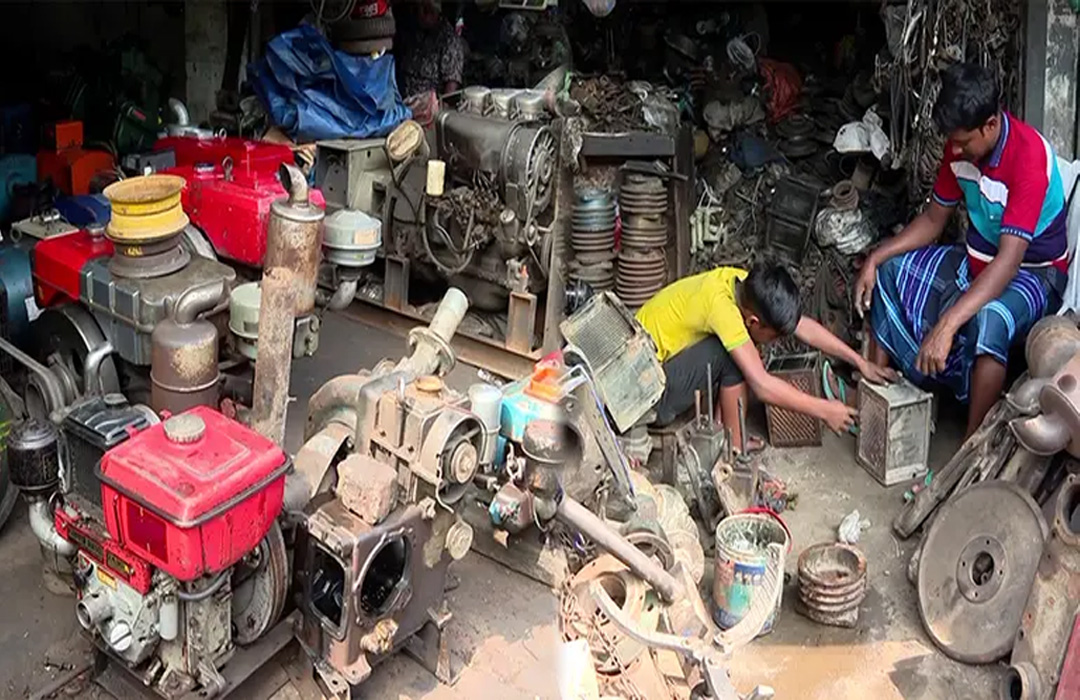
Once known for yogurt and grain storage, Bogura has
transformed into one of country’s most vibrant industrial centres through local
ingenuity and determination, not foreign investment or government projects.
According to media report, city now hosts over 600 factories producing more than two
thousand types of machine parts, from rice-harvesting equipment and power
chillers to centrifugal pumps and small tractor engines. Industrial revolution
began in the 1990s when young entrepreneurs questioned why Bangladesh imported
everything from agricultural pumps to textile machine components from China or
India.
Three decades later, around 80% of domestic demand for submersible pumps is met by Bogura-made machines, available at half the price of imports with comparable quality. This saves hundreds of millions of taka in foreign currency annually whilst providing farmers affordable, locally produced equipment.
Officially, over three thousand workers and engineers
are employed in Bogura's light engineering sector, but indirectly the number
exceeds 10 thousand. Annual transactions generate three to 4,000 crore taka,
contributing significantly to the national economy without foreign loans or
multinational involvement.
Products bearing ‘Made in Bogura’ labels now reach
African irrigation projects, Nepalese agricultural fairs, and Middle Eastern
industrial regions. One young exporter noted, “We may not be going abroad, but
our products are”.
However, challenges persist. Many factories still use
outdated lathe machines, limiting product finishing quality. Advanced
technologies like CNC, laser cutting, or 3D design remain scarce due to limited
formal training. Banks consider the sector risky, making loans difficult to
secure.
Workforce learns through hands-on experience rather
than formal education. One craftsman recalled, "My father was a mechanic.
As a child, I would take machines apart after school. Now, I design my
own." Japanese engineer once observed that precision in their hands
surpasses computer measurements.
Economists view Bogura as a symbol of Bangladesh's
self-reliance under the Made in Bangladesh 2030 initiative. With proper
recognition, training centres, accessible loans, and export incentives, city
could become the country's industrial cornerstone.