
Chinese hospital offers Bangladeshis affordable cancer treatment
প্রকাশ: শনিবার । জুন ২০, ২০২৬
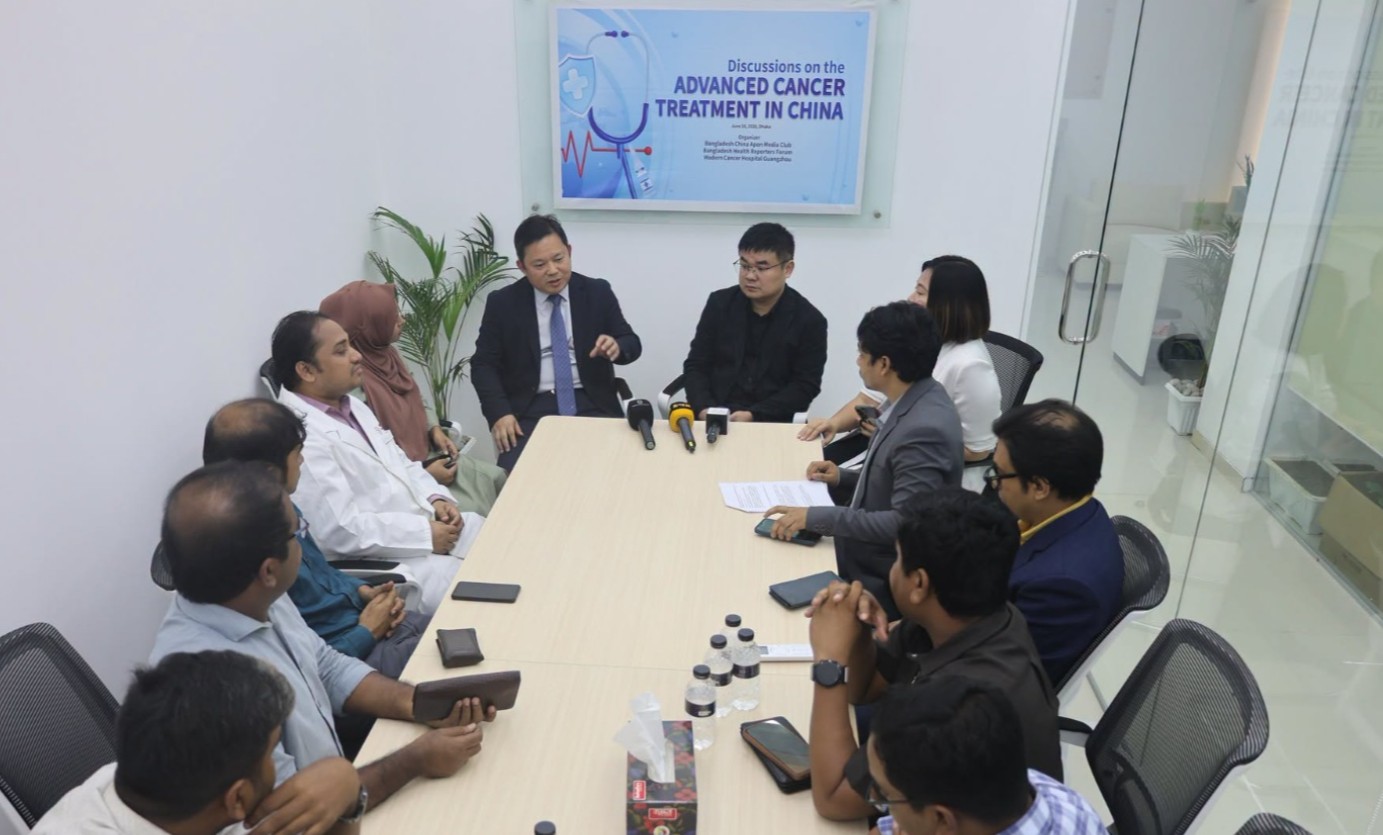
At a fraction of the cost of treatment in numerous developed countries, a Chinese hospital is providing Bangladeshi cancer patients with access to advanced minimally invasive treatment for cancer.
The technique, which causes minimal physical trauma, allows patients to resume normal activities the day after treatment, and is a stark contrast to conventional cancer therapies that often leave patients bedridden for extended periods, specialists from Guangzhou Modern Cancer Hospital told a seminar in Dhaka.
The seminar was recently jointly organized by the Bangladesh China Apon Media Club, the Bangladesh Health Reporters Forum and the hospital's Dhaka service centre.
"Many international patients with mid-to-late-stage cancer are recovering successfully in China," said Dr. Wu Wei, an oncologist at the hospital. "Because the physical stress and wounds are so minimal, patients can move around normally the very next day."
The hospital uses a combination of advanced techniques, including interventional therapy, which guides a catheter directly into a tumor's blood vessels to cut off its nutrient supply; cryoablation, which destroys cancer cells with extreme cold; and iodine-125 particle implantation, which places radioactive seeds inside the tumor.
Hospital Vice President He Lang Bin said Bangladeshi patients could assess their eligibility for treatment in China either online or by visiting the hospital's service center in Dhaka. He added that Bengali-speaking interpreters were available around the clock at the facility and that patients received free follow-up care from Chinese doctors after returning home.
Officials said China's strict medical regulations protected foreign patients from fraud and that world-class cancer care was available there at significantly lower costs than in many Western countries.
Bangladesh Health Reporters Forum Secretary General Mujahid Shuvo said the organization would work to ensure accurate information about the treatment reached patients across the country.