
Jet fuel shortages put pressure on airlines and passenger fares
প্রকাশ: মঙ্গলবার । এপ্রিল ১৪, ২০২৬
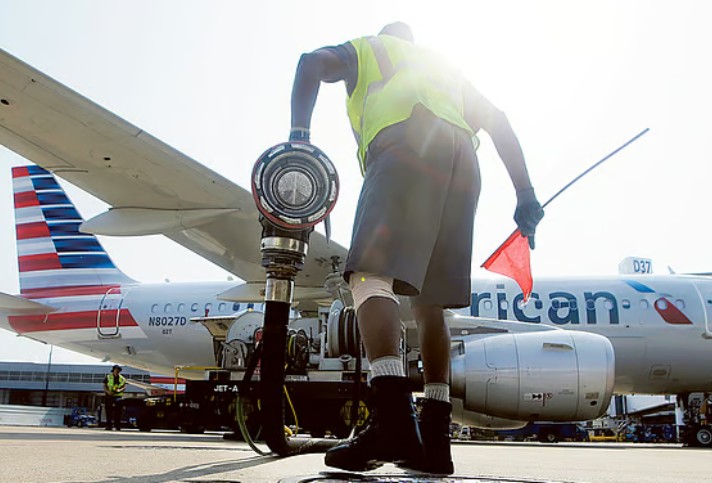
Jet fuel shortages are emerging as one of the most significant hidden pressures on global aviation, pushing up airline costs and forcing carriers to cut routes — with passengers increasingly bearing the burden through higher ticket prices.
While the causes are complex, industry experts say the core problem is not a lack of crude oil but a shortage of refining capacity capable of producing aviation-grade kerosene.
"Jet fuel remains the single most critical input cost for airlines after labour," Willie Walsh, Director-General of the International Air Transport Association (IATA), has warned, adding that supply disruptions can destabilise airline networks far beyond the regions where shortages originate.
A REFINERY PROBLEM, NOT A CRUDE PROBLEM
Global jet fuel consumption reached 7.788 million barrels per day in 2025 and is forecast to rise to nearly 7.99 million barrels per day this year, according to Energy Intelligence data.
Aviation fuel is produced by specialised refineries operated by companies including Shell, BP, ExxonMobil, Saudi Aramco and Sinopec, concentrated in hubs across the United States, Singapore, South Korea, India and the Gulf states. CAPA aviation analysts describe shortages as "a refinery allocation problem rather than a crude oil supply problem", as not every refinery is configured to produce sufficient aviation-grade kerosene.
Much of the world's jet fuel passes through the Strait of Hormuz, with Reuters reporting that more than one-fifth of global seaborne jet fuel trade transits that chokepoint — making the market highly vulnerable to geopolitical tensions and shipping disruptions.
THE COST TO AIRLINES AND PASSENGERS
Fuel typically accounts for between 25 and 35 per cent of airline operating expenses and can exceed 40 per cent during volatile periods, according to IATA economic data. Industry analysts estimate that roughly 20 to 30 per cent of a passenger airfare directly reflects fuel costs, with the share rising further on long-haul routes.
IATA's weekly fuel monitor shows global jet fuel has recently averaged $197.83 per barrel.
When shortages intensify, airlines respond by cutting flight frequencies, suspending weaker routes, or carrying extra fuel loads from airports with more reliable supply — a practice known as tankering. Reuters has reported that several Asian carriers have already trimmed schedules for precisely this reason. Ultimately, the additional costs are passed on to passengers through fuel surcharges and higher base fares.
NO EASY ALTERNATIVE
Sustainable Aviation Fuel (SAF), made from sources such as used cooking oil and agricultural waste, remains the only viable near-term substitute. However, IATA estimates SAF production in 2025 will reach just 1.9 million tonnes — equivalent to a mere 0.6 per cent of total global jet fuel consumption. SAF also costs two to five times more than conventional jet fuel.
Walsh has repeatedly warned that SAF output is "far below what aviation needs."
Airports Council International (ACI) Europe has cautioned that the continent could face jet fuel shortages if key shipping routes through the Strait of Hormuz remain disrupted.
In a worst-case scenario, analysts warn that smaller regional airports — with less storage capacity and fewer supply alternatives — would be the first to feel the full impact of any sustained shortage.
Source: Gulf News