
Strategic Growth Ahead: Middle East Priority in Biman’s Expansion Plan
প্রকাশ: রবিবার । জানুয়ারি ১৮, ২০২৬
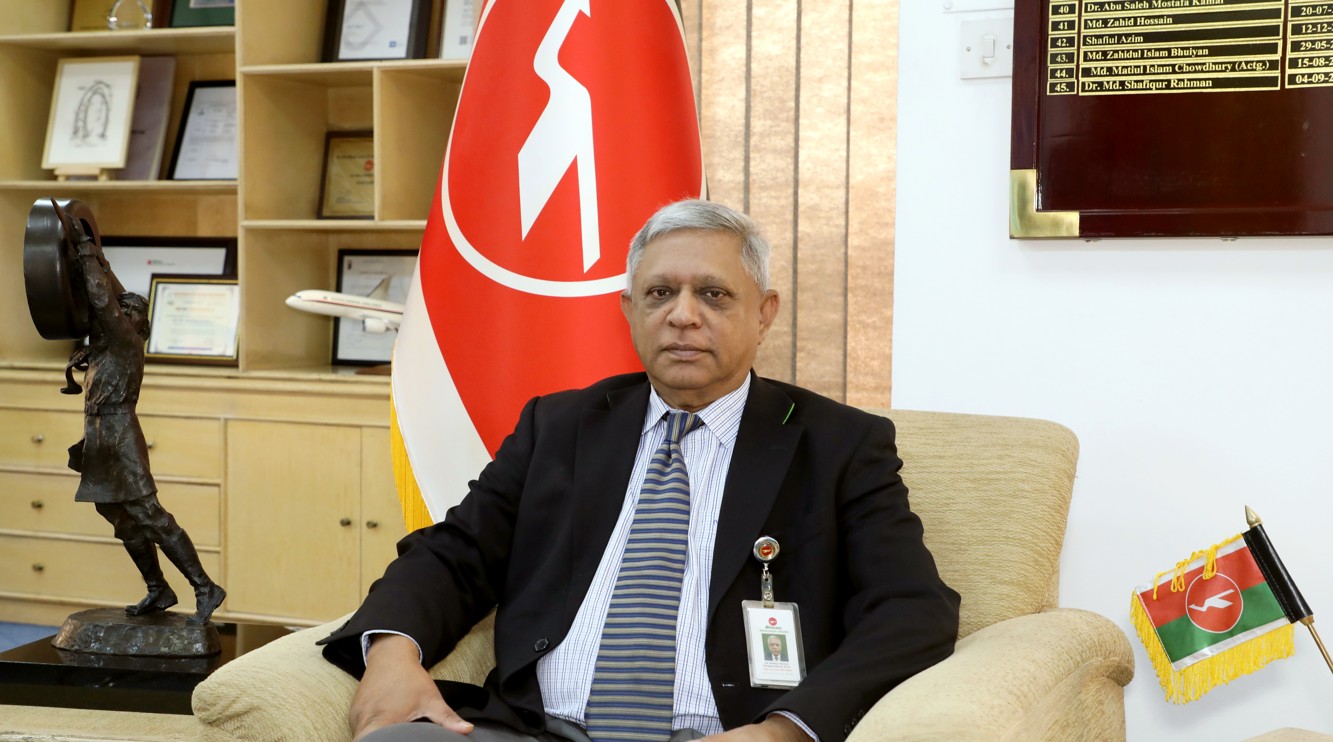
Dr. Md. Shafiqur Rahman was appointed as the Managing Director and CEO of Biman Bangladesh Airlines on September 4, 2024, by the airline’s Board of Directors. Prior to this, he served as the airline’s Director of Marketing and Sales, bringing decades of experience and deep institutional knowledge to the helm of the national carrier.
Dr. Rahman began his career at Biman Bangladesh Airlines in 1986 as a Trainee Commercial Officer and has held key leadership positions over the years, including Director of Administration & Human Resources, Director of Procurement & Logistics Support, and Director of Marketing & Sales. He has also worked extensively across specialized divisions such as Tariff, Market Research, Reservations, and Cargo, and represented Biman as Country Manager in Singapore, Thailand, and Greece. After a distinguished career spanning over three decades, he retired in 2017 before returning to lead the airline.
Recently, Dr. Rahman spoke to Tanzim Anwar, President, Aviation & Tourism Journalists Forum of Bangladesh (ATJFB), sharing insights on Biman’s financial turnaround, operational strategies, fleet expansion plans, and initiatives to align the national carrier with international standards of service and efficiency.
Since assuming office as Managing Director and CEO, which achievement do you consider the most significant so far, and why?
One of the most significant achievements during my tenure has been restoring financial discipline and operational stability at Biman at a time when the global aviation industry was still recovering from unprecedented disruptions. Achieving sustained profitability while maintaining uninterrupted operations, improving aircraft utilization, and strengthening internal controls reflects the collective effort of our workforce and management. For a national flag carrier, stability and reliability are as important as expansion, and that has been my primary focus.
Biman has reported record profits in last year. What key factors contributed to this turnaround?
The turnaround did not happen overnight. It was driven by a combination of strict cost control, better fleet utilization, rationalization of routes, and improved revenue management along with support from Board of Directors and Ministry of Civil Aviation & Tourism. We focused on optimizing fuel consumption, renegotiating service contracts, reducing avoidable operational losses, and strengthening financial oversight. At the same time, demand recovery in key international markets and disciplined capacity planning played a crucial role.
Despite profitability, Biman still faces pressure from outstanding jet fuel dues. What is your roadmap to settle these liabilities sustainably?
Jet fuel dues are a legacy issue that accumulated over many years. Our approach is pragmatic and structured. We are engaging with stakeholders to develop a sustainable repayment framework that does not compromise day-to-day operations. At the same time, currently we are repaying 25 crore per month and buying fuel on cash basis.
What are Biman’s future growth plans? Are new international routes under consideration?
Our future growth strategy focuses on measured network expansion aligned with market demand and operational capacity. We are planning to strengthen our presence on the International Market, while adding more destinations/increase capacity where demand from the Bangladeshi diaspora and business traffic remains strong. In addition, expansion in the Middle East is a key priority, given its importance for remittance Jeddah, transit passengers and cargo movement. All new expansion will be introduced in phases, supported by careful fleet planning, commercial viability assessments and service reliability considerations, so that growth remains sustainable and financially responsible. This will depend on addition of required number of Aircraft in the fleet.
Biman has long faced criticism over comparatively higher fares and low passenger loads on some flights. How do you respond?
It is true that in the past, some flights faced higher fares and lower passenger loads, and we have addressed these issues seriously. Previously, fare irregularities were partly driven by syndicate practices in ticket sales, which created artificial price hikes and reduced transparency. We have ensured completely transparent online ticketing, allowing passengers to see fares directly and book without interference. Alongside this, we have optimised pricing through better revenue management, adjusted flight frequencies, and focused on high-demand routes, while improving customer experience and service promotion. These steps have made fares more competitive and flights better utilised, all while maintaining safety and service quality.
The decision to procure 14 Boeing aircraft has drawn criticism. How do you address claims that the decision is politically motivated?
The decision to procure 14 Boeing aircraft was made entirely based on operational and commercial considerations. We evaluated multiple factors—fleet compatibility, maintenance support, financing options, delivery schedules, and long-term operational efficiency—before finalising the order. Our priority was to ensure that Biman’s fleet is modern, reliable and capable of supporting both current and future network growth, while maintaining safety and cost-effectiveness. It was guided by the airline’s strategic and technical needs.
Aircraft shortages during the Hajj season often disrupt regular operations. Is there an interim solution?
The Hajj season presents unique challenges due to peak, short-term demand. We manage this through wet-leasing arrangements, temporary capacity redeployment, and close coordination with authorities. While fleet expansion is the long-term solution, interim measures are necessary to ensure both Hajj operations and scheduled services are maintained with minimal disruption.
What strategies are being adopted to align Biman with international service and efficiency standards?
We are investing in staff training, digitalization of operational processes, and service quality improvements. Emphasis is being placed on on-time performance, safety culture, customer service, and compliance with international best practices. Aligning with global standards is not a one-time effort—it requires continuous monitoring and improvement.
What is your stance on curbing corruption within Biman?
Corruption undermines efficiency and public trust. We maintain a zero-tolerance stance. Internal audits, procurement oversight, digital record-keeping, and accountability mechanisms are being strengthened. Transparency is essential for the credibility of a national carrier, and we are committed to reinforcing it at every level.
As the CEO of the national carrier, how do you define Biman’s broader responsibility beyond financial performance, and what is your overarching vision for the airline?
Biman’s responsibility extends beyond profitability—it carries national identity, connectivity, and strategic importance. Our objective is to build a financially stable, professionally managed airline that meets international standards while serving the customers with reliability and pride.