Nation welcomes Bangali new year with vibrant festivities and renewed hope
 Desk Report
| Published: Tuesday, April 14, 2026
Desk Report
| Published: Tuesday, April 14, 2026
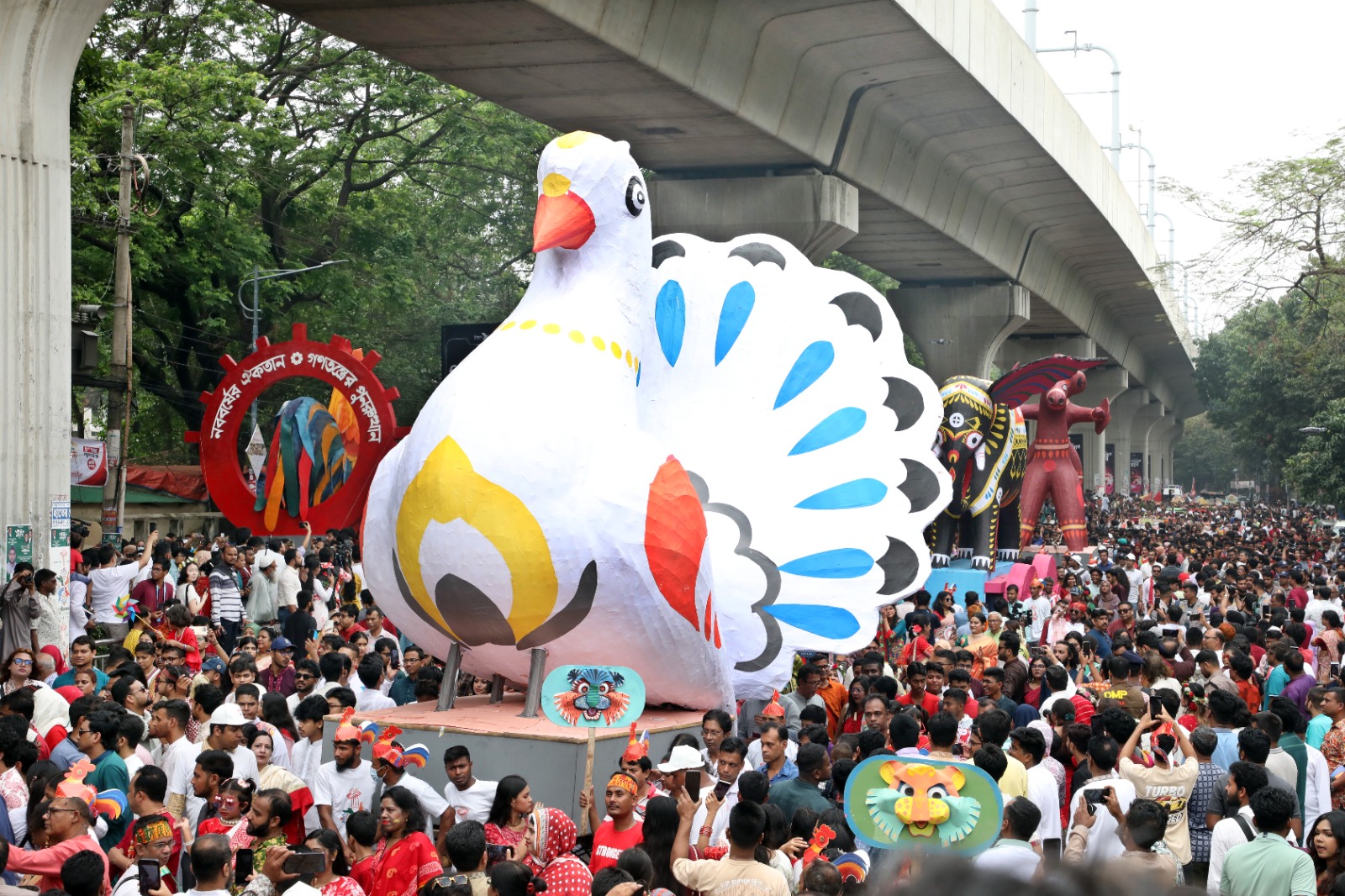
Photo: Oheduzzaman Titu
Shedding the sorrows, fatigue and burden of the outgoing
year, the nation is embracing the Bangali New Year -1433 today with vibrant
traditional festivities, renewed energy and optimism across the country.
Bangali’s pervading tradition Pahela Baishakh – the first
day of Banglai New year -- has evolved into a universal festival that
transcends religion, caste and ethnicity, bringing millions of Bangladeshis
together at home and abroad.
The day stands as a powerful expression of cultural
identity, patriotism and communal harmony. It carries the collective aspiration
that darkness and despair will be replaced by light, truth and beauty, while
the memories of the past year are left behind.
On
this public holiday, different organisations have taken elaborate programmes to
welcome the New Year and people of all walks of life including foreign guest
are celebrating the day.
Cultural
organisations are hosting daylong events, with celebrations beginning at
capital’s Ramna Batamul through the national anthem and the iconic song
"Eso He Baishakh" at dawn.
As
its tradition, the Faculty of Fine Arts at Dhaka University brought out the
traditional procession - this time named 'Baishakhi Shovajatra' with the theme
‘Harmony of the New Year, Resurrection of Democracy'.
The procession featured five key motifs- rooster, dotara
(folk instrument), pigeon, elephant and horse, symbolising strength,
creativity, peace, dignity and movement.
Around
35 musicians performed national songs including the national anthem and 'Eso He
Baishakh', while 200 students participated carrying the national flag in the
procession.
Meanwhile,
President Mohammed Shahabuddin and Prime Minister Tarique Rahman have greeted
the nation, in separate messages, extending New Year wishes to all citizens.
The
President called for unity, harmony and renewed commitment, describing Pahela
Baishakh as a 'universal festival of the Bengali soul'.
On
the occasion, Prime Minister Tarique Rahman said Pahela Baishakh is a unique
symbol of the nation's history, culture and identity.
He
noted that the festival has been returning for centuries with a message of
renewal, inspiring people to overcome past hardships and move forward with
determination.
The
Premier, in his message, highlighted the deep connection between Pahela
Baishakh and the country's agricultural traditions, nature and rural
economy.
People
of all ages are celebrating the day in colorful traditional attire as Baishakhi
fairs spring up across the country, featuring traditional games such as Boli
Khela (traditional wrestling), lathi khela and ha-du-du.
In Chattogram, the historic 'Jabbarer Bolikhela' is being held at Laldighi Maidan marking its century-old tradition.

The
Ramna Batamul celebration, organised by Chhayanaut, was once again present a
morning of songs dedicated to peace, humanity and harmony- continuing one of
the most iconic traditions of the day.
Udichi is also marking the occasion at Topkhana Road with
a day-long programme of music, poetry and dance, themed 'Let social fascism be
destroyed in the fierce spirit of Baishakh', with its main event scheduled at 4
pm.
Dhaka
South City Corporation arranged cultural programmes under the theme 'Let the
lost joys of Bengal return in Baishakh', while Art Pix is staging puppet shows
from April 14 to 21 on the Bangladesh Military Museum premises near Bijoy
Sarani.
Authorities,
including Dhaka Metropolitan Police (DMP) and RAB, have taken special security
measures to ensure peaceful celebrations across the capital.
The
Ministry of Cultural Affairs, along with Shilpakala Academy, Bangla Academy and
other cultural organisations, are observing the day nationwide through a
variety of programmes.
Special
arrangements are made to serve traditional food in prisons, hospitals and
shishu poribar alongside cultural programmes for children.
All
museums and archaeological sites remain open to commoners, with free entry for
children, students and persons with disabilities.
At
the local level, Baishakhi Shovajatra and cultural events are being held in
every district and upazila.
Local
administration is also organising folk fairs and essay competitions for
students at the district and upazila levels, while celebrations were arranged
in union levels.
Educational
institutions across the country are celebrating the occasion in a festive
atmosphere under their own initiative.
Special
programmes and traditional food are being arranged at hotels and clubs.
Meanwhile,
authorities have ensured adequate medical facilities, toilets and safe drinking
water around Suhrawardy Udyan and Ramna Park during the celebrations.
Business
communities, especially in rural areas have opened their traditional
'Halkhata', new account books, while sweetmeats are being distributed among
customers to mark the day.

Make Comment
Login to CommentPopular News





Subscribe to News Letter
Latest News