What you wear on a plane could matter in an emergency
 Desk Report
| Published: Monday, June 29, 2026
Desk Report
| Published: Monday, June 29, 2026
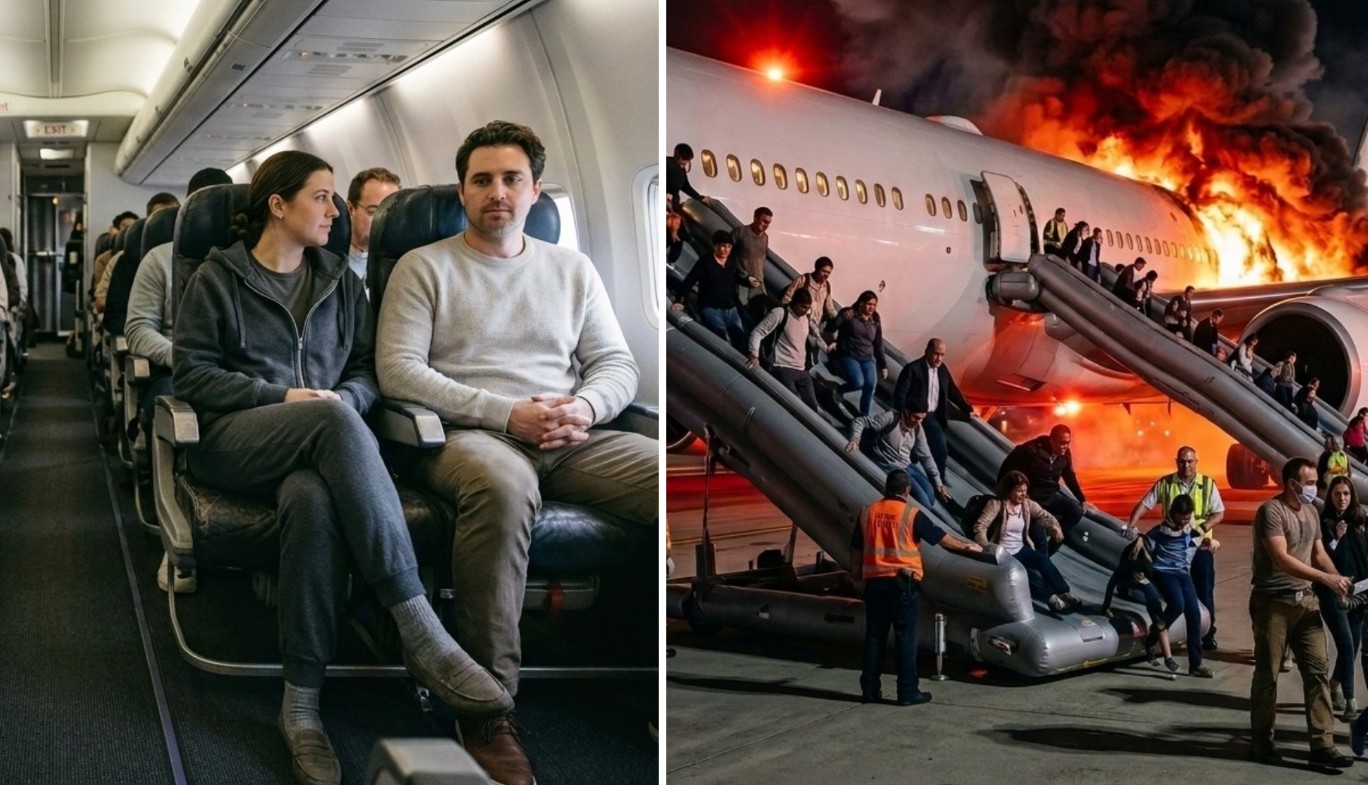
-AI Generated Representational Image
The choice of clothing for air travel is mostly driven by comfort. But a growing chorus of aviation safety professionals is making the case that what you wear on a plane can matter far more than convenience—particularly in an emergency.
A former Emirates Airlines employee recently renewed attention to a simple but critical piece of advice: avoid wearing shorts when you fly. The warning, which circulated widely after the ex-crew member explained it on social media, is not new within aviation circles. But for most passengers, it is a safety consideration they have never thought about.
The reason is rooted in physics and the design of aircraft emergency evacuation slides.
The Slide That Can Burn
Aviation regulators require every commercial aircraft with more than 44 passenger seats to carry inflatable evacuation slides at its emergency exits. These slides must be deployable in 10 seconds, and all passengers and crew must be able to evacuate the aircraft and reach the ground in 90 seconds or less — a standard set by the United States Federal Aviation Administration and mirrored by aviation authorities worldwide.
That 90-second window is not arbitrary. Research on post-crash fires found that a structurally sound cabin engulfed in flames remained habitable for around two minutes — a threshold known as the "flashover point." Speed is therefore everything, and the slides are engineered to move people quickly.
That speed, however, has a downside. It is easy to hurt yourself on the way down, especially if bare skin touches the slide. Friction causes the majority of evacuation injuries—in one Airbus certification test, 32 of the 33 mishaps recorded were slide burns.
What the Data Says
Formal safety research documents the risk. A study commissioned by the US Transportation Research Board—the Airport Cooperative Research Program's Report 2, published in 2008—examined slide evacuation injuries across US air carriers. The annual variation in the percentage of slide evacuations causing injury ranged from less than 30 percent to more than 70 percent, averaging 50 percent. Minor injuries recorded included friction abrasions, scrapes, strains, and contusions. Serious injuries included fractured ankles, broken legs, major bruises, and lacerations.
More than 80 percent of reported injuries from evacuation slides have been classified as minor injuries—but "minor" in a medical classification still means painful friction burns, sprains, and cuts that, under emergency conditions, must be endured while passengers move away from a damaged or burning aircraft.
The Correct Technique — And Why Clothing Matters
Aviation safety trainers advise passengers to cross their arms over their thighs as they descend an evacuation slide, keeping hands away from the slide surface. Attempting to slow yourself down by pressing your hands against the slide—a natural instinct— is exactly what causes severe hand and palm burns.
Bare legs in shorts leave the entire thigh and lower leg exposed to the slide surface for the full duration of the descent. Long trousers—particularly those made from natural fibers such as cotton—provide a layer of protection that can meaningfully reduce the severity of friction burns.
Synthetic fabrics such as nylon and polyester also pose risks. Aviation professionals have long cautioned that nylon, in particular, can melt under heat and adhere to the skin, creating injuries that are significantly more difficult to treat than standard friction burns.
Japan Airlines 516 — A Real-World Lesson
The January 2024 collision of Japan Airlines Flight 516 with a Japan Coast Guard aircraft at Tokyo's Haneda Airport renewed global attention on evacuation safety. All 379 people on board the Japan Airlines flight were safely evacuated, a result widely described as remarkable given that the aircraft was engulfed in flames. The incident prompted fresh scrutiny of evacuation standards and passenger behaviour in real emergencies—and reinforced the message that preparation, including what a passenger is wearing, can affect outcomes.
What Aviation Safety Professionals Recommend
The guidance from aviation professionals is consistent and straightforward:
Wear long trousers made from natural fibers—cotton is the most recommended option. Avoid shorts, skirts, and dresses for long-haul or any flight where emergency preparedness matters to you. Keep footwear practical: lace-up shoes or trainers that stay securely on the foot are strongly preferred over heels, slip-ons, or sandals, which can come off during an impact or on the slide itself. Remove high heels before using an evacuation slide, as they can puncture and deflate the slide itself.
The Bottom Line
While emergencies in commercial aviation are rare and the safety record is strong, wearing appropriate clothing is crucial during evacuations. Evacuation slides can cause friction burns, and long cotton trousers provide essential protection.
Before choosing shorts for your next long-haul flight, think about the potential risks.
Sources: FAA, SKYbrary Aviation Safety, Simple Flying, Business Times

Make Comment
Login to CommentPopular News




Subscribe to News Letter
Latest News