Airbus vs. Boeing: Which Manufacturer Has More Widebody Orders In 2025?
 Desk Report
| Published: Tuesday, December 02, 2025
Desk Report
| Published: Tuesday, December 02, 2025

Photo: Shutterstock I Simple Flying
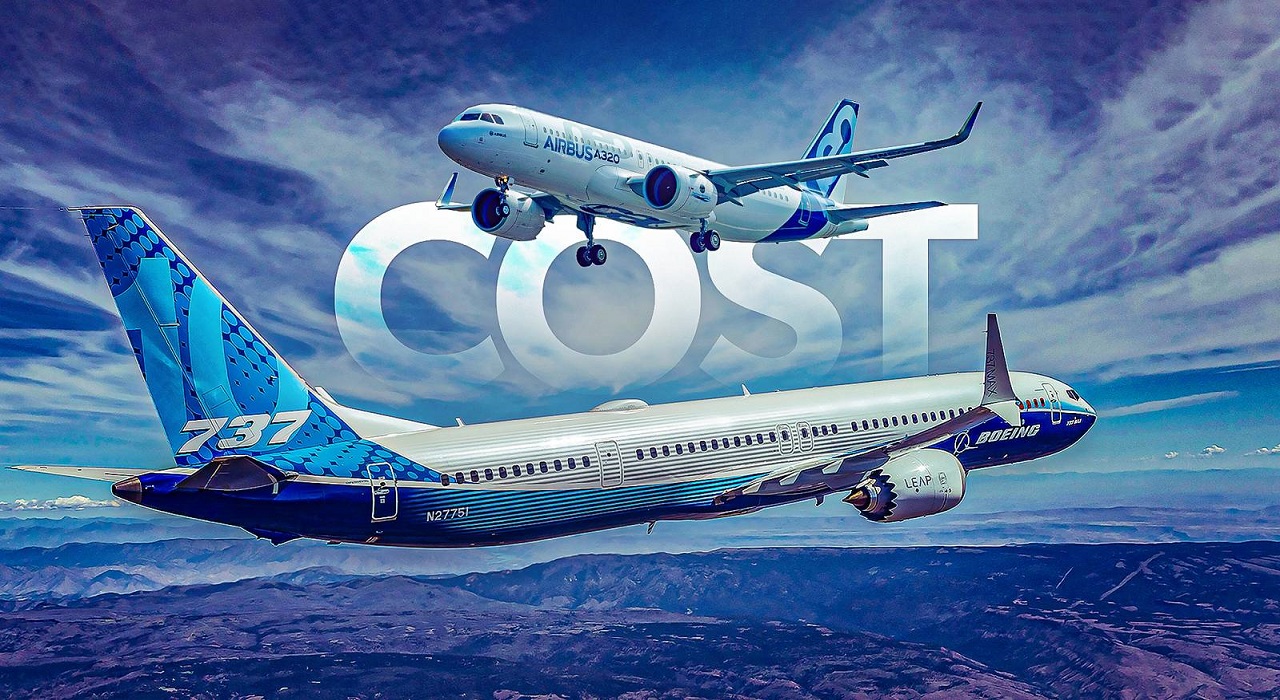
Airbus and Boeing are the classic duopoly. They're virtually the only companies producing large narrowbodies in large numbers, and they're the only producers of widebody airliners in the world. Naturally, the situation leads to intense competition between the two manufacturers. The narrowbody market is high volume and makes up a majority of commercial aircraft revenue for Airbus and Boeing, but the widebody market is also lucrative due to higher margins despite lower volumes, as well as high development and production costs.
Boeing has produced a total of four narrow-body jet airliners and four wide-body airliner programs in its history. Airbus, meanwhile, has only ever sold two single-aisle planes (one of which, the Airbus A220, was developed by another company), while it has produced six widebody airliners. Despite this, Airbus has long held the lead in the narrowbody market, while Boeing has historically led in the twin-aisle market. But with 2025 coming to a close and both manufacturers as evenly locked as ever, which company is holding the lead with its widebody airliners?
Looking At The Widebodies From Boeing And Airbus
Currently, Airbus sells widebody airliners from two aircraft families: the Airbus A330 and the Airbus A350. Currently, the A330 is on sale as the A330neo, with Airbus producing the smaller A330-800 and the larger, more popular A330-900. These are refreshed versions of its older A330-200 and A330-300, equipped with the Rolls-Royce Trent 7000, along with aerodynamic and technological improvements. The A350, meanwhile, is sold as the A350-900, the A350-1000, and the upcoming A350F, currently Airbus's only freighter.
Boeing produces twin-aisle jets from three aircraft families: the Boeing 767, the Boeing 777, and the Boeing 787. The 767 is now only produced as the 767-300F and the military 767-2C, which will be excluded from this article. The 777 is still sold in its last-generation 777F variant, along with the still-in-development 777-8 and 777-9. These two are part of the revised 777X family that features a stretch, new engines, technological improvements, and a new wing. The Boeing 787, meanwhile, is sold as the 787-8, 787-9, and 787-10.
Airbus currently has a backlog of 291 Airbus A330neo aircraft, of which only five are A330-800s, while the remaining 286 are for the A330-900. The A350 program has a backlog of 765 aircraft, split between 440 A350-900s, 251 A350-1000s, and 74 A350Fs. This totals 1,056 remaining orders for Airbus widebodies. There are 23 unfilled orders for the 767-300F, while there are 54 remaining orders for the 777F and 622 orders for the 777X family. The Boeing 787 has 1,048 remaining orders, totaling 1,747 outstanding orders for Boeing widebodies.
Orders By The End Of October
By the end of October 2025, Airbus had reported 722 orders. Of these, 521 were for the A220 and A320, while 201 were for the widebody A330neo and A350 XWB. The A330neo had received 90 orders, which is a surprisingly high number for what has been a fairly slow seller so far, although all 90 were for the A330-900. Meanwhile, the A350 program received the remaining 111 orders. Eight orders for the A350F were canceled, leaving the company with 103 net orders for the family, consisting of 12 A350Fs, 22 A350-900s, and an excellent 69 orders for the A350-1000.
By October 31, 2025, Boeing had reported 822 orders, 100 more than its competitor. No orders were received for the 767-300F, but Boeing did receive 13 new orders for the 777F. The Boeing 777X family received 84 new orders, all of which were for the 777-9 and the 777-8F, while no 777-8s were sold. The Boeing 787, meanwhile, had an excellent year in which 321 examples were sold, made up of a single 787-8 by an unidentified customer, 176 787-9s, and 144 787-10s. Added up, this totals 418 orders for widebody Boeing models, or more than double the number that Airbus received.
Boeing models continue to outsell their Airbus counterparts, with many highly publicized orders having come from carriers like Qatar Airways, which is responsible for 160 of these sales. The 777X also continues to receive steady orders. However, it is notable that the A330neo received 90 orders, given its lack of popularity in the past. In addition, the A350-1000 has outsold the rest of the A350 family, despite most orders for the A350 family having been for the A350-900 so far. On a side note, the A320neo outsold the 737 MAX once again.
The Dubai Airshow 2025 Numbers
The Dubai Airshow 2025 was held from November 17 to November 21. Before this, Boeing received 15 orders from Air Astana for Boeing 787-9s, four orders from Somon Air for 787-9s, and eight orders for 787-9s from Uzbekistan Airways. In total, Boeing sold 27 Boeing 787s. Airbus, meanwhile, received six orders for A350Fs from Air China Cargo but otherwise had a quiet month before the airshow.
Perhaps the biggest news from the Dubai Airshow was the announcement that Emirates ordered 65 new Boeing 777-9s, bringing its total 777X order book to 270 jets. In addition, the two parties announced a study for a hypothetical 777-9 stretch, tentatively called the 777-10, although this is far from an official launch. In addition, Gulf Air finalized an order for 15 787-9s, along with options for three more. In total, Boeing sold 80 widebody airliners at the Dubai Airshow.
Airbus sold six A330-900s, three A350Fs, and seven A350-1000s to Etihad Airways. Airbus also sold six new A350-900s to Ethiopian Airlines and signed a memorandum of understanding (MoU) with Air Europa for 40 A350-900s, although an MoU is not a firm order. In total, if you include the MoU, Airbus sold 62 widebody airliners at the Dubai Airshow, still fewer than those sold by Boeing. Note that these figures do not include previous orders that were recently disclosed, such as an order by Emirates for eight A350-900s that was previously listed as undisclosed.
Adding Up The Sales For 2025
What we see here is that the Boeing 787-9 is the star of the market. Year to date, Boeing has sold 218 787-9s. In addition, the 787-10 has also gained traction with 144 sales, although it's still selling less than its smaller, more capable sibling. The 777X has also had a fantastic year, with a total of 149 sales, all for the 777-9 model. However, most of these sales are from Qatar Airways and Emirates, the type's two largest customers. When you exclude their top-off orders, the 777-9 order book is less impressive.
96 sales for the Airbus A330-900 is fairly impressive, although it's less than half the number of the competing 787-9. The A350-900 has had a relatively slow year in comparison, with only 68 sales. The A350F received 29 orders, although eight orders were also canceled this year. The A350-1000 has instead been the star of the A350 family in 2025, with 76 new sales. It's also worth noting that while the A350 family outsold the A330neo as a whole this year, the A330-900 sold more copies than any of the three A350 variants.
In total, Boeing sold 363 Boeing 787s, while Boeing sold 162 Boeing 777s (including the 777F, 777-8F, and 777-9). This adds up to 525 widebody airliners. Airbus has sold 96 Airbus A330neos, and the A350 family received 173 new orders. Added up, this amounts to 269 orders for Airbus widebodies, slightly more than half the number of sales that Boeing recorded for its twin-aisle aircraft.
The Dynamics Of The Widebody Market
The Airbus A330neo has been outsold by the Boeing 787, but the A330neo doesn't need to be a big seller. Airbus spent comparatively little to develop it, and it's also cheap for existing A330 operators to integrate into their fleets. It costs about the same or slightly more to operate than a 787; it has less capability, but it's also cheaper to buy and integrate. In addition, A330neos are available sooner than 787s, which are sold out for years, and this also plays a role in airline purchase decisions. The A330neo is doing its job.
The A350F has been roughly even with the Boeing 777-8F, but as a whole, the A350's sales have been fairly slow compared to prior years. The A350-1000 has historically been overshadowed by the A350-900's sales, but as Boeing 777-300ERs begin to age, it's become more popular. The 777X has sold nearly as many copies as the A350, but many of these orders are from Qatar Airways and Emirates, the two largest customers for whom the aircraft is exceptionally well-suited.
In addition, many of the high-profile orders for Boeing widebodies were announced during visits to the airline's home country by US President Donald Trump. This includes the Qatar Airways order as well as those from Air Astana, Somon Air, and Uzbekistan Airways. The political aspect of the large orders for Boeing airliners in 2025 should be considered.
Source: Simple Flying

Make Comment
Login to CommentPopular News



Subscribe to News Letter
Latest News




Weather Outlook
Sunny
Dhaka, Bangladesh
Wind: 10.8 kmph · Precip: 0 mm · Pressure: 1017 mb

24.6°C
Sat
21.4°C
Sun
21.6°C
Mon
21.8°C