Face to Face
Local airlines could capture 60% international market share - MD, US-Bangla Airlines
 Senior Reporter
| Published: Wednesday, March 11, 2026
Senior Reporter
| Published: Wednesday, March 11, 2026

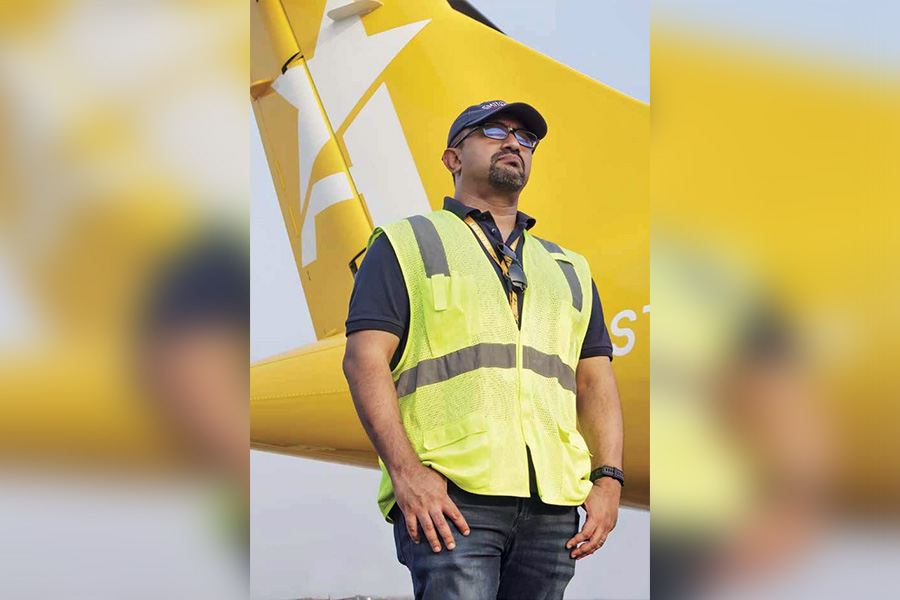
Md. Abdullah Al Mamun, Managing Director US-Bangla Airlines.
Bangladesh’s aviation sector is witnessing rapid growth, driven by rising passenger demand and increasing international connectivity. Yet industry leaders say structural challenges, ranging from the shortage of skilled aviation professionals to limited maintenance infrastructure, continue to constrain the sector’s full potential.
In an exclusive interview with Md Tanzim Anwar, President of the Aviation and Tourism Journalists Forum of Bangladesh (ATJFB), Md. Abdullah Al Mamun, Managing Director of the country's largest private carrier, US-Bangla Airlines, shared his assessment of Bangladesh’s aviation ecosystem, the airline’s fleet expansion plans, and its ambitious goal of significantly increasing market share on international routes.
How do you evaluate Bangladesh’s aviation sector today?
Aviation is one of the most capital-intensive industries in the world. There are very few products more expensive than an aircraft. A single narrow-body aircraft can cost around Tk 1,000–1,500 crore depending on its configuration.
Running such an expensive asset requires highly skilled professionals—primarily pilots and engineers. Unfortunately, Bangladesh still lacks a strong aviation ecosystem. We do not have internationally recognized aviation engineering schools or globally certified pilot training academies approved by authorities such as the FAA or EASA.
Without these institutions, airlines must depend heavily on foreign engineers and pilots, which increases operational costs.
Another major issue is the lack of backward linkage in aviation. Industries like garments thrive because they have strong support systems—local production of accessories and materials. Aviation in Bangladesh does not yet have such supporting industries.
Maintenance infrastructure is another challenge. Minor maintenance can be performed on the ramp, but major maintenance requires certified hangars. Bangladesh currently does not have an FAA-certified hangar. As a result, airlines often have to send aircraft abroad for heavy maintenance.
US-Bangla is working to establish the country’s first FAA-standard hangar facility, which we hope will become operational soon.
What is your fleet expansion and modernization plan?
Our strategy focuses on maintaining global standards in both service quality and fleet modernization.
For the first time in Bangladesh’s private aviation history, US-Bangla will operate brand-new Boeing 737 narrow-body aircraft. The first aircraft are expected to arrive between May and June. Since independence, private airlines in Bangladesh have mostly operated previously used aircraft. US-Bangla will be the first private carrier in the country to introduce brand-new narrow-body aircraft directly from the manufacturer.
We have also been expanding our fleet. Our goal is to operate a modern fleet comparable with leading global airlines. Globally, airlines like Emirates or Singapore Airlines maintain relatively young fleets, often around ten years of average age. We aim to move in that direction as well. Our aim is to make our fleet average age in between 6 to 9 years within next four years.
The government has spoken about transforming Bangladesh into a regional aviation hub. What does that require?
An aviation hub cannot be created simply by building airport terminals. It requires strong local airlines that can connect passengers through the country.
Foreign airlines typically operate point-to-point flights. They cannot build connectivity for Bangladesh in the way local carriers can.
Transit infrastructure is also essential. Airports must provide proper airline lounges, efficient transfer facilities and smooth immigration procedures. Transit passengers should also have the option to leave the airport for short visits, which would boost tourism and the local economy.
Cities such as Dubai and Doha have built successful aviation hubs by integrating aviation with tourism and hospitality.
Local airlines currently carry only about 25 to 30 percent of international passengers. How can that share increase?
Yes, currently Bangladesh’s two carriers, Biman Bangladesh Ltd and US-Bangla Airlines, together carry roughly 25–30 percent of international passengers, while foreign airlines dominate the rest.
Increasing that share requires improvements in service quality, fleet modernization and operational reliability. Aircraft may be similar globally, but the passenger experience varies widely—seat comfort, cabin cleanliness, connectivity and overall service quality matter greatly.
If Bangladeshi airlines maintain global standards, we believe domestic carriers could increase their share to around 50–60 percent in the long term.
For US-Bangla specifically, our goal is to reach around 30 percent international market share by mid 2027 through increasing our fleet size and connecting more destinations.
How do you plan to achieve that target?
One strategy is expanding operations from making regional hubs such as Chattogram and Sylhet.
A significant portion of Middle Eastern travelers originate from the Chattogram region. We plan to base dedicated three aircraft in Chattogram to operate direct flights to destinations such as Dubai, Abu Dhabi and Sharjah.
Similarly, we are strengthening operations from Sylhet to make another base there to serve expatriate markets in the Middle East and the United Kingdom. This approach will reduce unnecessary transit through Dhaka and improve passenger convenience.
What new international routes are under consideration?
We are exploring several destinations with strong demand from Bangladeshi expatriates.
Potential routes include Jeddah, Madinah, South Korea, Kuwait and Brunei. Route frequencies will depend on passenger demand and market conditions.
What initiatives is US-Bangla taking to improve passenger service and safety?
Safety remains our top priority. US-Bangla was the first private airline in Bangladesh to obtain IOSA certification from International Air Transport Association (IATA).
IOSA (IATA Operational Safety Audit) audits are conducted regularly, and auditors often come from leading global airlines. We also use advanced digital monitoring systems that allow us to analyze flight data and detect any deviations in operational parameters.
Additionally, we are investing heavily in training. This year alone we plan to send 100 pilots and 50 engineers abroad for advanced training.
What reforms are needed in Bangladesh’s aviation regulatory framework?
Our regulatory framework must align more closely with international standards set by the International Civil Aviation Organization.
Successful aviation authorities such as those in Singapore or Europe follow best practices developed over decades. Bangladesh can learn from these examples and adopt similar systems for flight operations, engineering oversight, ground handling, and safety management.
Another important step is engaging international consultants and certified auditors to guide regulatory reforms. Many countries invite ICAO-certified auditors to evaluate their aviation systems and recommend improvements.
Institutional continuity is also critical. Aviation is a highly technical sector where it takes years to build expertise. Frequent transfers of trained staff can disrupt the system. Personnel should ideally remain in key positions for several years to develop deep expertise.
Should the Civil Aviation Authority have greater autonomy?
Yes, to a certain extent. The Civil Aviation Authority of Bangladesh should be able to operate independently in areas such as recruitment and organizational structure while remaining under overall government supervision.
Currently, many decisions require lengthy approvals from the ministry, which slows down progress. Greater operational autonomy would allow the authority to respond more quickly to industry needs.
Finally, where do you see US-Bangla Airlines in the next five years?
Within five years, we aim to significantly expand our international presence and achieve around 50 percent market share among Bangladeshi carriers.
We also plan to establish a large aviation training academy where pilots, engineers, cabin crew and ground personnel can receive training under one roof.
In addition, we are exploring the possibility of developing an MRO facility and even a privately operated aviation hub that could attract global aviation companies.
Bangladesh has a population of over 220 million people and a large expatriate community. The demand for air travel will continue to grow.
But to realize that potential, we must build a complete aviation ecosystem, not just airports, but also training, maintenance, and world-class aviation services.

Make Comment
Login to CommentPopular News




Subscribe to News Letter
Latest News